
Skeptics love to debunk zombies and the undead. The idea of a zombie outbreak presents several logical points open for debate, such as causes, physiology, the contagious nature of an epidemic and even if a reanimated corpse is possible. Skeptics illustrate that conventional, “real” zombies exist only as a product of voodoo sorcery using tetrodotoxin, or TTX, as a means to incapacitate and render almost unconscious their victims.
For the sake of this argument, I will be referring to a zombie as not a member of the undead, but rather human bodies acting seemingly without a will of their own, with an intention to consume, destroy, or otherwise cause general grief to the remaining human populace.
Zombies in popular culture form three distinct classes:
- Walking Dead – undead, walking dead or reanimated corpses
- Viral – viral, parasitic or infected humans
- Scientific – scientifically altered humans, through radiation, poisons or drugs, or psychic conditioning
The Walking Dead
Our current understanding of human physiology, biology and chemistry tell us that a human corpse cannot rise, reactivate or in any other way reanimate. There must exist an external stimulus to bring about reanimation. If such a stimulus succeeds in reanimating a corpse though electricity, nutrient rich serum, or some strange radioactive measure, the corpse will still have difficulty with life support. A reanimated brain can function and provide basic skills such as breathing, blood pumping and simple motor skills, operating on a primitive, feral level. The reanimated head and brain show signs of smell, taste hearing and sight. This is evidenced by previous Soviet and current American experiments. An undead person would have one thought: feed to keep the body moving. The only problem is, the entire body would also be reanimated and would need energy to survive, much like any other human does. Air, water, food. Assuming a physiology like that of the living, a heart shot would be just as effective in destroying the undead. Muscles need air and energy, and this is pumped by the blood.
Undead Physiology
If the physiology of the undead changes, it is a different matter. Muscles can operate through electricity alone, that’s how they work at the most basic level. Apply a current and a muscle will tense; remove it and it will relax. Corpses always contain rot and the organisms involved in breaking down dead tissue. If the process in reanimating the corpse causes its brain to be active and conduct electricty, the body is essentially a walking meat-machine. The organisms and acids responsible for breakdown of the body will still be present. The moving muscles of the body will produce enough heat to slow or halt the decomposition. The remaining bacteria will remain internal, and begin slowly decomposing the body from the inside. An introduction of warm flesh (human or other mammals) to the zombies digestive system will prevent the necrotizing organisms from eating the zombie. Necessary energies for locomotion would be converted from the byproducts of digesting fresh flesh, and absorbed through the decaying flesh.
If radiation is involved, certain properties could dispel decomposition or produce mutations responsible for an adaptive physiology. In either situatuation, the corpse is not conscious. It would operate on an instinctual level that could include self-preservation through an aggressive nature. It would be more efficient to use muscles slowly, but short bursts of strength or speed could be produced.
Undead Transmission
If the cause of a reanimated corpse is through scientific methods such as resuscitation, electrical reanimation or means as yet uncovered, infectious transmission will probably be nil, as the means of reanimation will be artificial.
However, if the zombies saliva, greymatter or blood contains a toxic solution or causes mutation of the host’s physiology, infection could occur. Transmission of disease and horrible toxins can cause a rapid sickness in a bitten victim, causing death. They may not awaken as a zombie, but could certainly be susceptible to the same factors that reanimated earlier corpses.
Parasitic Infections
There exist in nature certain organisms that cause paralysis, altered survival, behavioral and sexual patterns and can evenmake their host suicidal. They use either toxins, neural paralysis or behave as parasites to cause their host to enter a state of zombism, sacrificing itself for the reproductive nature of the parasite.
Zombie-state Causes
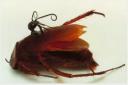 The emerald cockroach wasp (Ampulex compressa) is a parasitoid wasp that temporarily paralyzes cockroaches, and takes careful aim at the roaches brain, nullifying its evasive response. The wasp then controls the roach through its antennae, much like a dog on a leash. It steers the heavy roach to its lair, where the wasp lays eggs that later hatch and eat their way out.
Similarly, an unclassified species of Costa Rican wasp attacks an orb weaving spider, which is temporarily paralyzed as it lays eggs on the tip of the spider’s abdomen. On the night before the parasitic larvae kill their host, normal web-weaving events take a bizarre turn. Through some unknown mechanism, the larvae compel their host spider to build a web that is very different from that it has always constructed before – the spider builds a stout, reinforced platform which is much smaller. When the new web is complete, the larvae kill their host, and cocoon themselves on the structure.
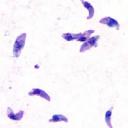 Toxoplasma gondii is a species of parasitic protozoa that has an interesting means of reproduction. It has the ability to change the behavior of rats and mice, making them drawn to, rather than fearful of, the scent of cats. This effect is advantageous to the parasite, which will be able to sexually reproduce if its host is eaten by a cat. The infection is almost surgical in its precision. Human behavior may also be affected in some ways, and correlations have been found between latent Toxoplasma infections and various characteristics such as decreased reactionary time, feelings of insecurity, neuroticism, and possibly even cases of schizophrenia and paranoia. T. gondii is also correlated strongly with an increase in boy births in humans, leading to an alteration of the human sex proportion. Other possible behavior modifications are suggested by a study suggesting that people not infected with the parasite found women with toxoplasma more attractive. Similarly, brain eating amoeba cause death in humans – and show little signs until its too late.
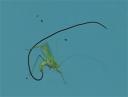 On a larger scale, the nematomorph hairworm (Spinochordodes tellinii) hairworm lives and breeds in fresh water. However, it spends a part of its life eating the insides of live grasshoppers and then brainwashing the grasshopper into committing suicide by hopping into a pool of water and drowning.
Rabies. Need I mention this? It already carries the common traits of traditional Zombism. Rabies lives in the brain, is transmitted through infectious saliva and alters an animals mind to produce an aggresive, rage filled state. Infections in humans also can cause paralysis, hydrophobia and hallucinations.
Admittedly, a parasitic brain-stabbing wasp or hairworm has quite a leap to go from a simple insect to a human host. It is within reason to assume that such a wasp could attempt an attack on small mammals or otherwise mutate or evolve its patterns if roaches are in low supply or develop counter-tactics. As mammals don’t have antennae their ability to steer one is a bit of a stretch. Yet, a mammalian host is still receptive to being internally devoured by wasp larvae or hairworms. With an effective species jump, the hairworm could cause mammals to produce similar suicidal traits. Neither of these would result in zombism, but serve to illustrate brain chemistry and that an organisms behavior can be modified to that of even the smallest parasite. T. gondii’s decreasing the male populous is interesting, as it shows even homo sapiens is suceptible to mind and biology altering parasites.
Zombie Parasite Transmission
Rabies serves as the most interesting and most likely candidate for infectious parasitic zombism. While not a zombie in the conventional undead sense, all the characteristcs would be displayed, mainly an aggressive nature, infected brain matter, and transmission through saliva. Infected humans of a mutated or even radioactive strain of rabies would definitely exhibit these feral symptoms – and would probably be fast too. As shown in the remake of “Dawn of the Dead” or the “28 Days Later” movies, fast zombies are a real problem. Though a “zombie” in thoughtless, rage filled terms, a headshot will still bring these humans down. Heart and body shots are another matter – filled with adrenaline and crazed, they may exhibit symptoms of “quislings” and not be brought down as easily as uninfected humans.
Scientifically Altered States
The third, and most probable cause (though mush less dangerous) is through an altered state of consciousness. George A. Romero or John Carpenter would have us believe we’re already in this state if commercialism, suburbanites and mass apathy are any indication. However, I am referring to altered brain and body states as induced by hypnosis or toxins.
Altered Consciousness
As documented in “The Serpent and the Rainbow”, the tetrodotoxin (TTX) of the puffer fish can be used by voodoo priests to cause a zombie-like state of near death. TTX is a highly potent neurotoxin which causes paralysis and eventual death. Gram for gram, TTX is 10,000 times more lethal than cyanide and posesses a terrifying modus operandi — 25 minutes after exposure it begins to paralyze, leaving the brain fully aware of what’s happening. Death usually results, within hours, from suffocation or heart failure. No antidote exists. A victim pronounced dead can be lucky enough to wake up just before his funeral, fully conscious and aware of his surroundings throughout the entire ordeal. TTX has the unusual characteristic that if a nonlethal dose is given, the brain will remain completely unaffected. If just the right dose is given, the toxin will mimic death in the victim, whose vitals will slow to an immeasurable state, and whose body will show signs of rigor mortis and even produce the odor of rot.
Methods induced by sickness, hypnosis or raditation could produce a similar, slowed-brained result. In either case, the zombified person would be neither dead nor aggressive (unless provoked or instructed to be), most likely a threat only to his or herself.
Transmission
Transmission of this type of zombie would be impossible, as the source of zombification remains with the host – either through poisoning or hypnosis. This is non-transferrable and the process could in fact be reversed with proper medical care or a well-placed snipers bullet. This type of zombism is seen as the only plausible kind, and skeptics debunk it as a world-ender much as I have. However, they fail to mention the above methods.
Conclusion
Voodoo zombies remain a curse – but only in the literary sense. Throughly studied, they pose no threat to humankind. Research into reanimating or resuscitating the recently deceased is under investigation and has been in practice since the 1940’s – but no serious headway has been made, and the physiology of keeping some dead thing alive takes a bit of a stretch – but could be possible.
The most probable cause of a zombie pandemic would be through an opportunistic or mutated parasitic organism or virus. Virii remain the dominant form of life on the planet, able to quickly mutate, adapt and change to live (and kill) a variety of hosts. Vaccination serves little purpose and would only serve as an opiate or pacifying agent – much like “Phalanx” in Max Brooks’ “World War Z”. The cause of zombies in his world is through a virus called “Solanum” which reanimates corpses, turning their blood to goo and bears many of the same characteristics of zombies.
Should any of the discussed sources merge or attack at the same time – science help us. Stay away from rabid dogs, eh?
Resources
- Cinema Fiction vs. Physics Reality
- CDC Rabies Just 4 Kids
- Wasp performs roach-brain-surgery to make zombie slave-roaches
- Toxoplasma gondii
- Mind-Controlling Wasps and Zombie Spiders
- How Zombies Work
The post A Statistical Analysis of Real Life Zombies first appeared at The Undead Report.

25 million infected
Hey… cool stuff. Keep up the good work
Thanks Josh, stay tuned.
Well, I’m thoroughly creeped out now, awesome.
I will say this, we’ll be lucky if the Dead Things really do only move slow, because if it eventually turns out to be a modified rabies virus instead, I think we’re all screwed… Unless someone already has an anti-zombie base built.
Although it’s possible that if the outbreak was caused by the rabies virus, then after some time passes the zombies might turn on each other or wear down remarkably from starvation and dehydration. It’s unclear if a person would retain the mental capacity to feed themselves or even remember to consume normal foods over the length of several months.
If they do retain the capacity to remember to feed their hunger and quench their thirst, then I stick to my main point- we’re screwed.
I think that it is significant that there has been a considerable upshot in the prevalence of zombie and zombie related lore. I actually just finished the audiobook for World War Z, and while it is ostensibly a work of fiction, I have begun to question whether it is in fact not all that plausible, or possible.
Given the development of new manufacturing processes and the unsustainable excretion of wastes into the natural environment, its not unthinkable that somewhere, something could happen that upsets the natural balance of shit in general.
more research, and maybe a few castles.
Well people it’s like this. If it does turn out to be like rabies then by all means we MAY BE screwed. However, in a normal infection the dog (or zombie in this case) usually dies within a month at the most. and it will be a rather painful death. I’m just saying…
Even if the outbreak happens to be rabies induced, we’ll still be screwed. The capital, economic, and infrastructre damages will be catastrophic, if not irreversible. Even if infected die after three to eight weeks, the infection will remain – the first wave may die off, but there will be others, perhaps causing the strain to be prominent for over a few years.
Yes Falcon, the natural balance is very fragile. HUman beings are hardy and can adapt, but nature isn’t so forgiving – if something happens to bees, we all die. Everything. Flowers, food, plants – we’re screwed. There is evidence of this occuring, but it seems to not be catastrophic for now.
Another person with the same view on the undead!
Just to say, max brook’s zombie survival guide will help, making a fort, besides the uk had a case of rabies that lasted longer than a month with the host in-tact, if this happens in a outbreak, id deffinitly not give up hope. after all, rabies can only be spread by humans, by the foaming mouth, if high class rabies (RARE!) itll be bite.
Left 4 dead is an example of the way of life (ish) of a zombie apocalapse, (except its just a city or other places infested) I would honestly follow max brooks advice on deffense with a few human traps, nad when on the run to, but on the attack id rather do a left 4 dead. (no im not game talking) but still, im already worried when i gave out a new year jinx for 2009 about a zombie infestation lol!
So it could be a 28 days later like apocalapse or like dead rising
Rabies even if mutated would only contribute to a short period of infectious or violent behavior. Its a mind altering virus but far from one that reanimates cells, It slowly breaks them down in the brain. First symptoms show up on day one, by day 10 your either dead or paralyzed.
i’m hoping that when the zombie outbreak happens, the zombies are slow, shambling night of the living dead zombies, because all you have to do is jog away from them at a leisurely pace ( i hope) and jump up on a truck where they can’t reach you and start shooting. from what i’ve seen, slow zombies cannot jump or duck. if it happens that they are like 28 weeks later, it will be mpore like fighing real humans because they are still humans, except they are really, really, pissed off and like to upchuck blood at you and don’t use weapons ( thank god) and they can climb and jump(?) and stuff. so, lets hope for an outbreak of slow ones, shall we?
so essentially the most plausible zombie like situation would be similar to people on large amounts of PCP, cuz that makes you very manic, and you dont feel pain, allowing you to be shot several times without going down or feeling it, you could break several bones and not feel it, you dont have any remorse, you act impulsively.. this one famous musician did large amounts of PCP, then he ate his girlfriend, and they found him covered in blood naked laying in the grass at a park, cuz the effects are essentially similar to Rabies, or i could be wrong idk, just my thought. respond if u would like too
Even if the infected die off after only a short time the damage to society and culture will be horrible. The economy will colapse, goverment officials would be scatered and a large number replaced, industry cripled, and important commercial items like food and fuel would be hard to get to the masses. This kind of chaos would only add to the pandemic the actual virus caused, and cause more damage overall as society would try desperately to come together and rebuild. Any large scale virus or disease that could cause something like this would set our planet back decades if not centuries in resources, population, and technology. Prepare brothers and sisters….shit is gonna hit the fan soon.
Cpl Larson
USMC
hey… just tell me more about 2012 zombie apocalypse??? mail me please rizaldyblackmore@yahoo.co.uk
Viruses evolve! When alcohol, iodine, or antibiotics don’t kill a virus it evolves and becomes immune to these things. Research “superviruses”. The more man kills viruses unnaturally(modern medicine) the stronger viruses become. Along with these immunities to previous killers the viruses also have stronger or sometimes even new symptoms. EXAMPLE: first wave symptoms – congestion, headaches, low fever. A cure is made. the virus evolves. second wave symptoms – strong fever, dizziness, vomiting. A new cure is made. the virus evolves again. third wave symptoms – strong fever, vomiting, verbal confusion, blackouts. In a way we are creating our own doom. This stuff is no joke. I know my explanation is bland, but its hard to explain. Just research it. It will scare you. “SUPERVIRUSES” What if rabies does this? What if the common cold does this? What if symptoms of the common cold become zombism? How fast would it spread? Who would live?
[…] not alone. Among the others doing so are the blog The Undead Report, whose January 2008 “Statistical Analysis of Real Life Zombies” appears to have been greatly influenced by Cracked’s more reader friendly “5 […]
TTX prevents muscle movement, & so the victim wouldn’t be a good zombie anyway.
Also, (sorry for double posting)
What kind of virus or mind-parasite would cause a human to want to eat another?
Confusion I understand. Spreading through accidental contact I understand (dentists may be the first to go).
But how would rabies make somebody a cannibal?
After looking at Wikipedia, it appears that second stage rabies would be the most likely to bite sombody, and third stage would be the ones we recognize as “zombies”– staggering & stuff.
Rabies also allows for zombie animals, which is something I just hate, but I guess it’s possible– & therefore I should prepare for zombie rats.
Even so, mania and delirium wouldn’t necessarily cause a person to bite his fellows.
Well, if he got hungry enough for chicken…I’ve heard humans taste like chicken..so then chickens would taste of human
aww damn now i gotta prepare for them things now i need like 1000 rat traps and things to go under my door to stop them from coming in
or…do a s.t.a.l.k.e.r. move and just stand there and shoot them with an aks-74u. hopeless, but you can say you went out with a bang..or a rat tat tat..
You should ad the one that makes ants get eaten on purpose along with the one that mutates frogs so they get eaten. Come to think of it its scary how many parasites do that o.o
finally some one who thinks zombies can be real. I am [REDACTED] and I have always thought that there is a possiblility that this could happen. I have always been interested in zombies because it wouldnt be that hard for a scientist or government person to even accidentally make a zombie. they are experimenting and messing with our DNA and shit so they could try to cure a disease or try to control us and stumble on something that does this to people and it could spread… I agree even if the actual zombie attacks dont last long it will distroy civilization. If the zombies are anything like Left4Dead or fast at all we are probably screwed. if they are slow we have a chance but it could spread easily and we could be out numbered.My E-Mail is Reapers14@live.com if you would like to discuss this or something.
Well, in all honesty if it is like rabies then in six months all the first generation zombies will be dead. We just have to worry about newer people turning into zombies. Alas if it is like that they will be easier to kill than a head shot. Perferable but not the only option. See I know in reason that rabies spread through slava and blood. Get bit you get it, mix blood or swallow any of those fantasically gross fluids then you are screwed. Just hole up somewhere and wait it out if possible. If not then best of luck. If there is a zombie outbreak, find me and we will kick some zombie a$s together. But if I get bit and we know for a fact I will turn… shoot me in the head.
I argue all tge time with family n friends about zombies n they think i am nutts i just saw well when it does happen i will be laughing my butt off then hide somewhere or find all my guy friends who ik who got guns n stick it out with them ;) if i survive ima be like woot lets repopulate teh world With meh slowly XD fun fun